The fifteen minute reset
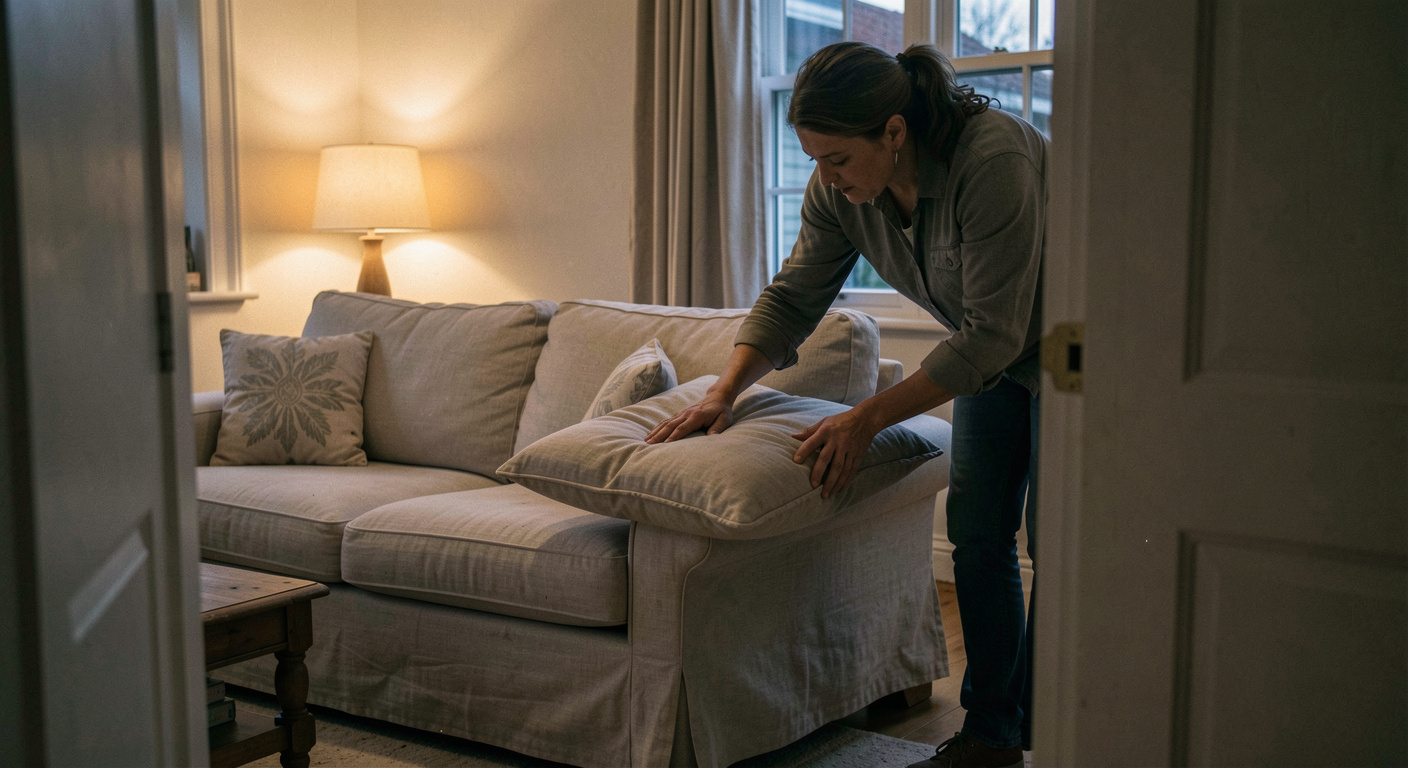
One short pass through the shared rooms before bed does more for a house than an entire Saturday. The order it runs in, what it leaves alone, and why the timer matters more than the standard.
The practice of running a home, written down.
Filed from March 2026
The whole record
Everything written down so far, in date order, most recent first. The date on an entry is the day it was filed, and it moves when the entry is revised, so this page is also a record of what changed and when. The homepage carries the recent entries and each section carries its own, but this is the only page that holds all of them at once.
The record opens on 14/03/2026 with the household inventory, which is the least glamorous thing on the site and the one that answers questions for the longest. If you are starting rather than browsing, the two entries that change a house fastest are the fifteen minute reset in the evening and letting frequency decide where things live in the cupboards. What the record is for, and how it is written, is set out in about Kept.
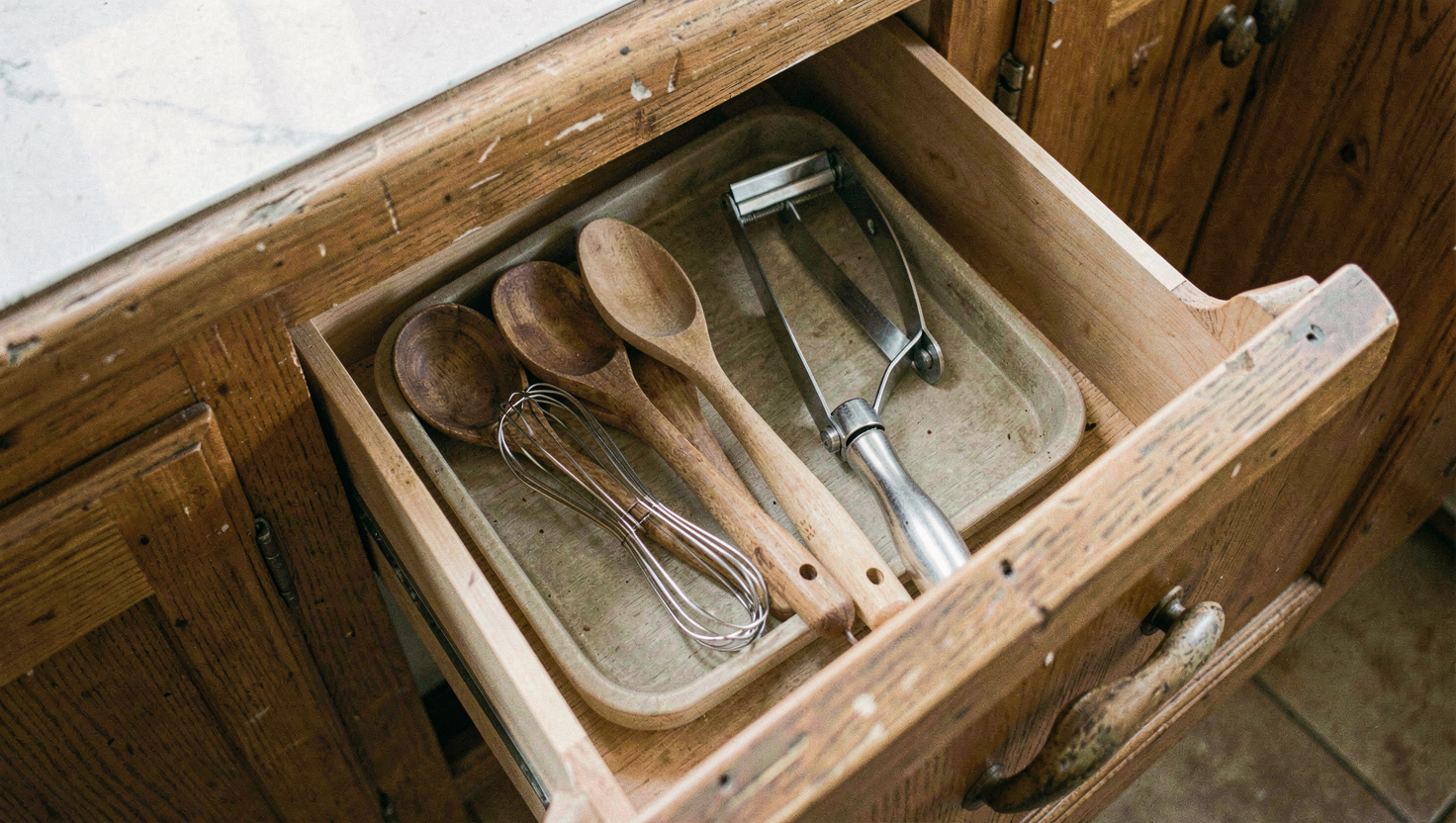
One short pass through the shared rooms before bed does more for a house than an entire Saturday. The order it runs in, what it leaves alone, and why the timer matters more than the standard.
A jar used daily and a jar used at Christmas should never share a shelf. Sorting a house by how often you reach for something removes most of the tidying before it starts.
The same amount of time spread differently produces a different house. Short and frequent keeps a place level, long and rare only ever recovers it.
Four times a year, walk the outside of the building and then the inside, in the same order, looking for water. Most household repairs begin as something you could have seen.
Five symbols carry everything a garment needs. Once the tub, the triangle, the square, the iron and the circle are read properly, the wash becomes a decision instead of a risk.
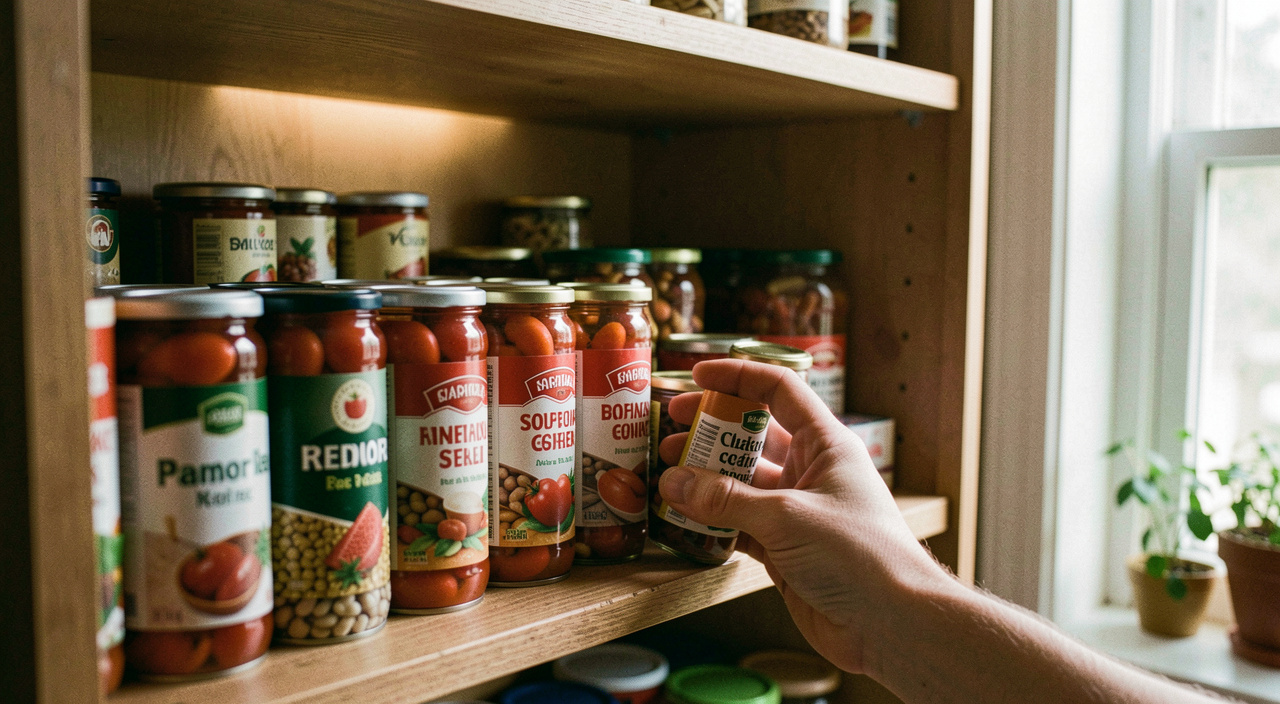
Standard store cupboard lists are written for somebody else's kitchen. Build yours backwards, from the ten meals your household actually repeats.
Households do not need a filing system, they need four folders and a rule about what goes in each. Anything more elaborate stops being used by February.
Ten minutes with the calendar on a Sunday removes most of the small emergencies of the week. Which nights nobody will cook, which morning leaves early, what has to be bought before Wednesday.
Stand in a doorway and look only at what sits between knee and shoulder height. That band is what visitors see, what children reach, and where clutter actually accumulates.
A cupboard filled to capacity has no way of absorbing a delivery, a school holiday or a bad week. Slack is what makes a storage system survive contact with real life.
Washing dries indoors on two conditions: moving air and somewhere for the moisture to go. Get those wrong and the wall behind the airer pays for it.
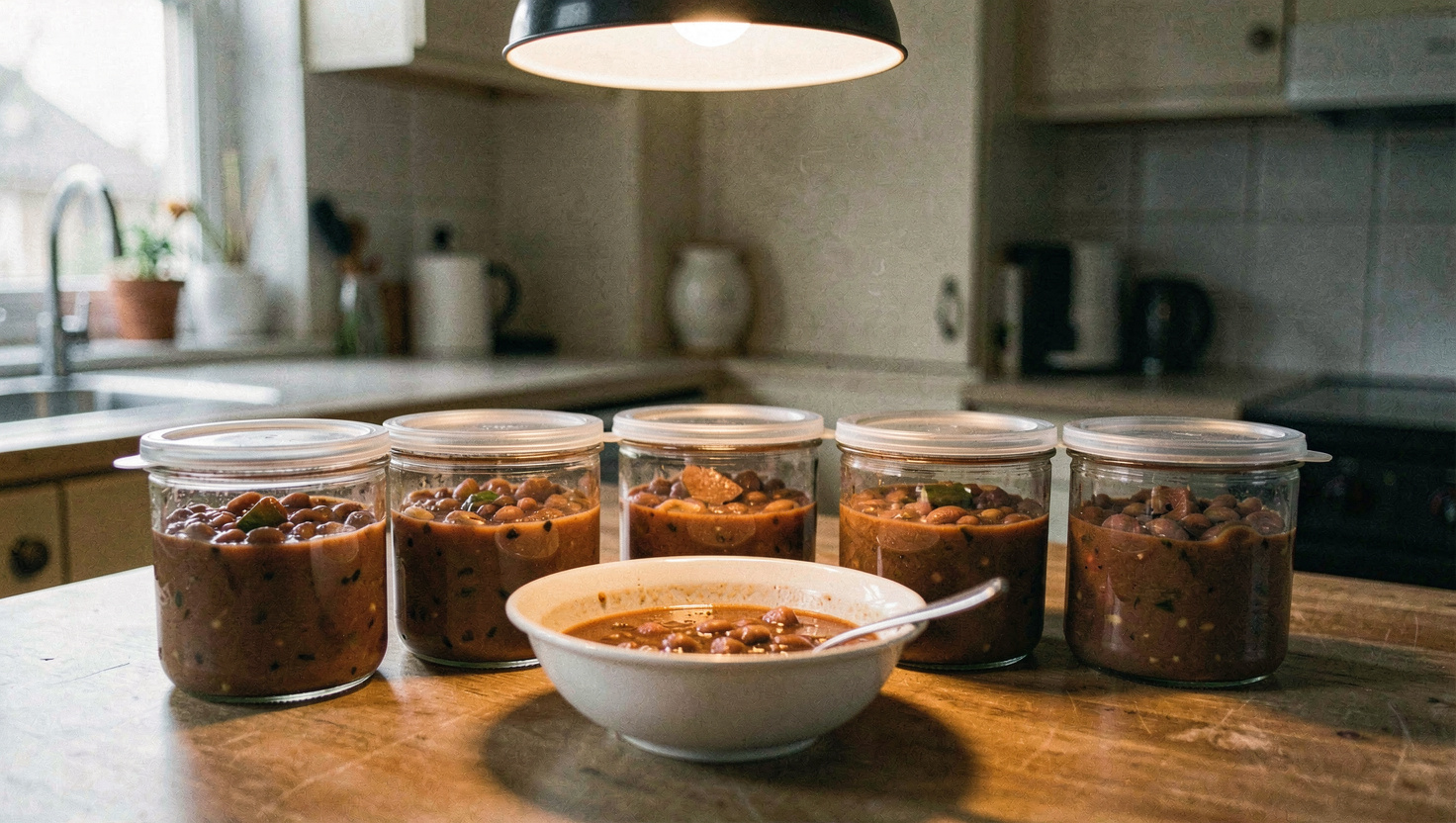
Cook the base in quantity and finish each portion on the day. The difference between a stock and a meal is fifteen minutes of fresh work at the end.
A warranty is only worth the minute it takes to find the receipt. One box, one clip, one date written on the front of each manual.
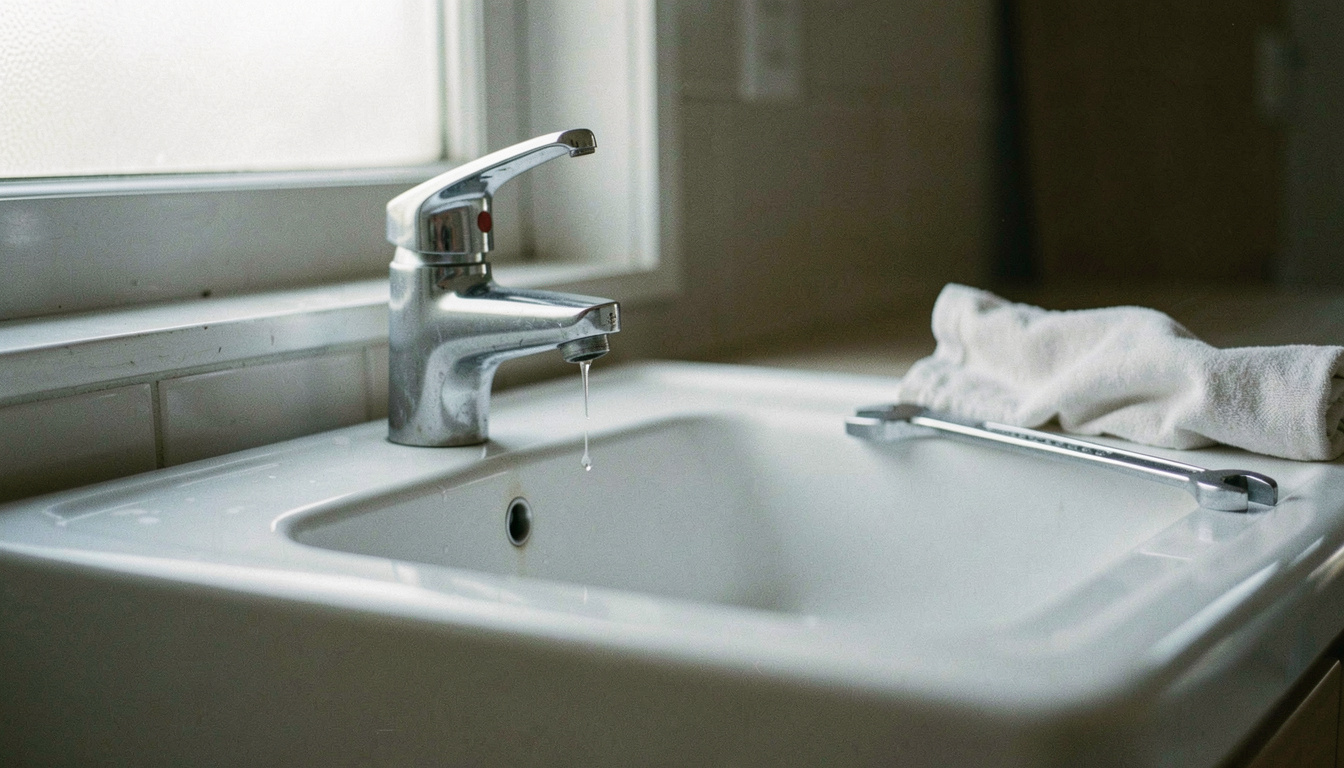
A squeak, a slow drip and a door that catches are all ten minute jobs while they are small. Kept on a list and cleared in one pass, they never become a trade call.
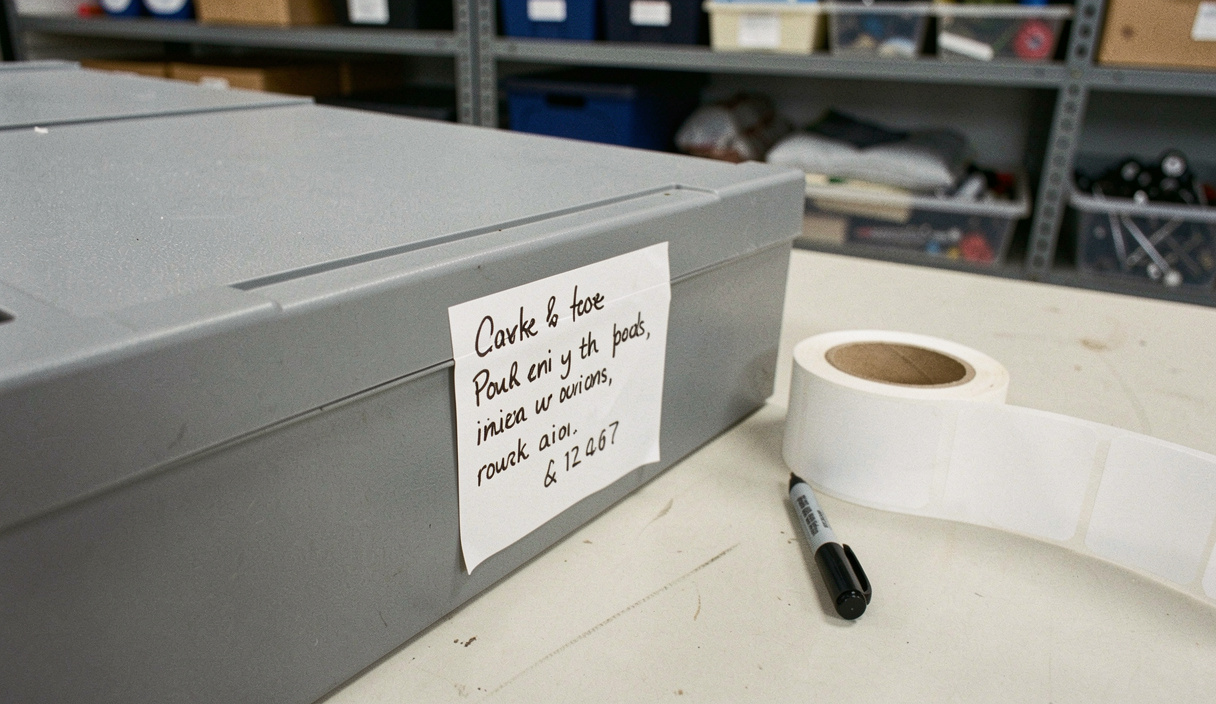
A label written in biro on masking tape is gone by autumn. What survives a year is a label chosen for the surface it sits on, and written the same way every time.
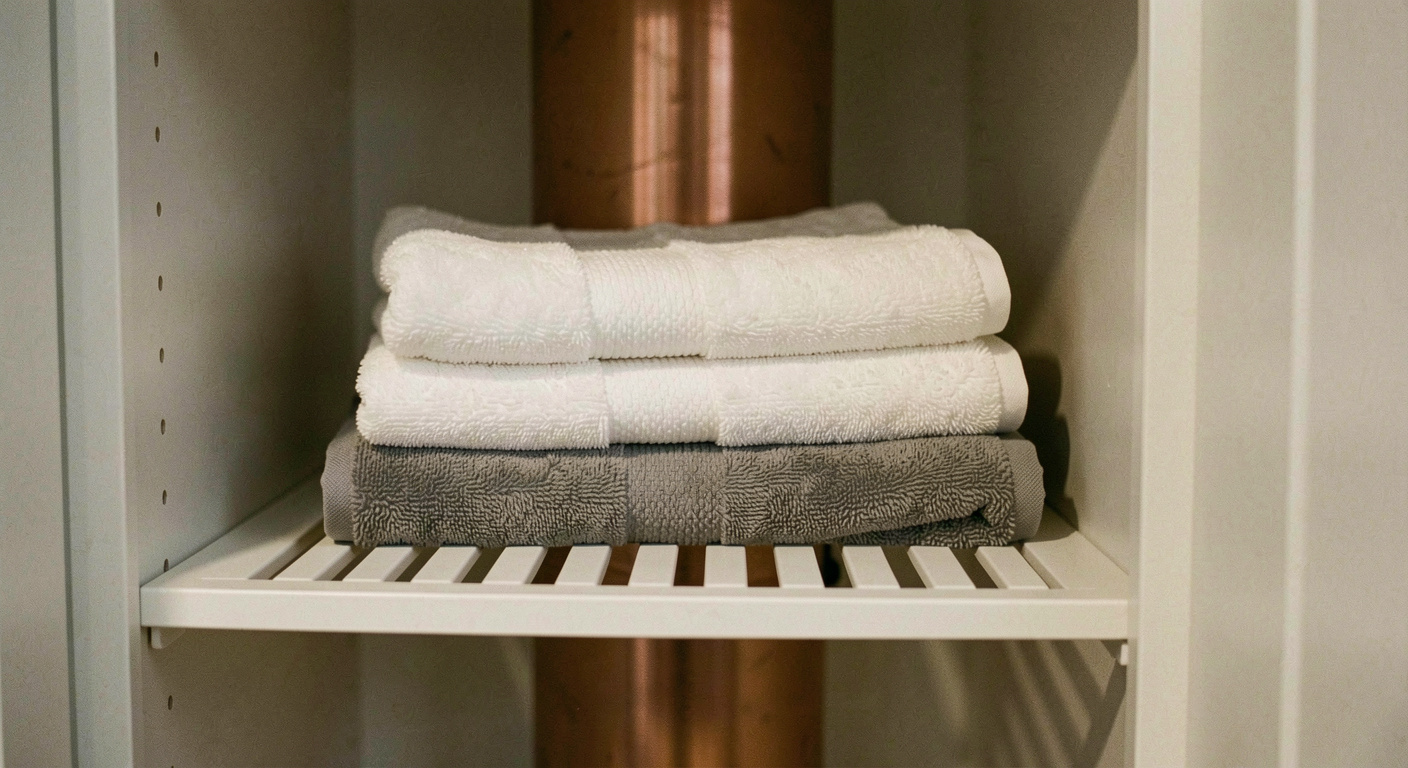
Four towels per person, two in service and two in the cupboard, is enough for a household that washes weekly. It also stops towels dying of overwork in the same month.
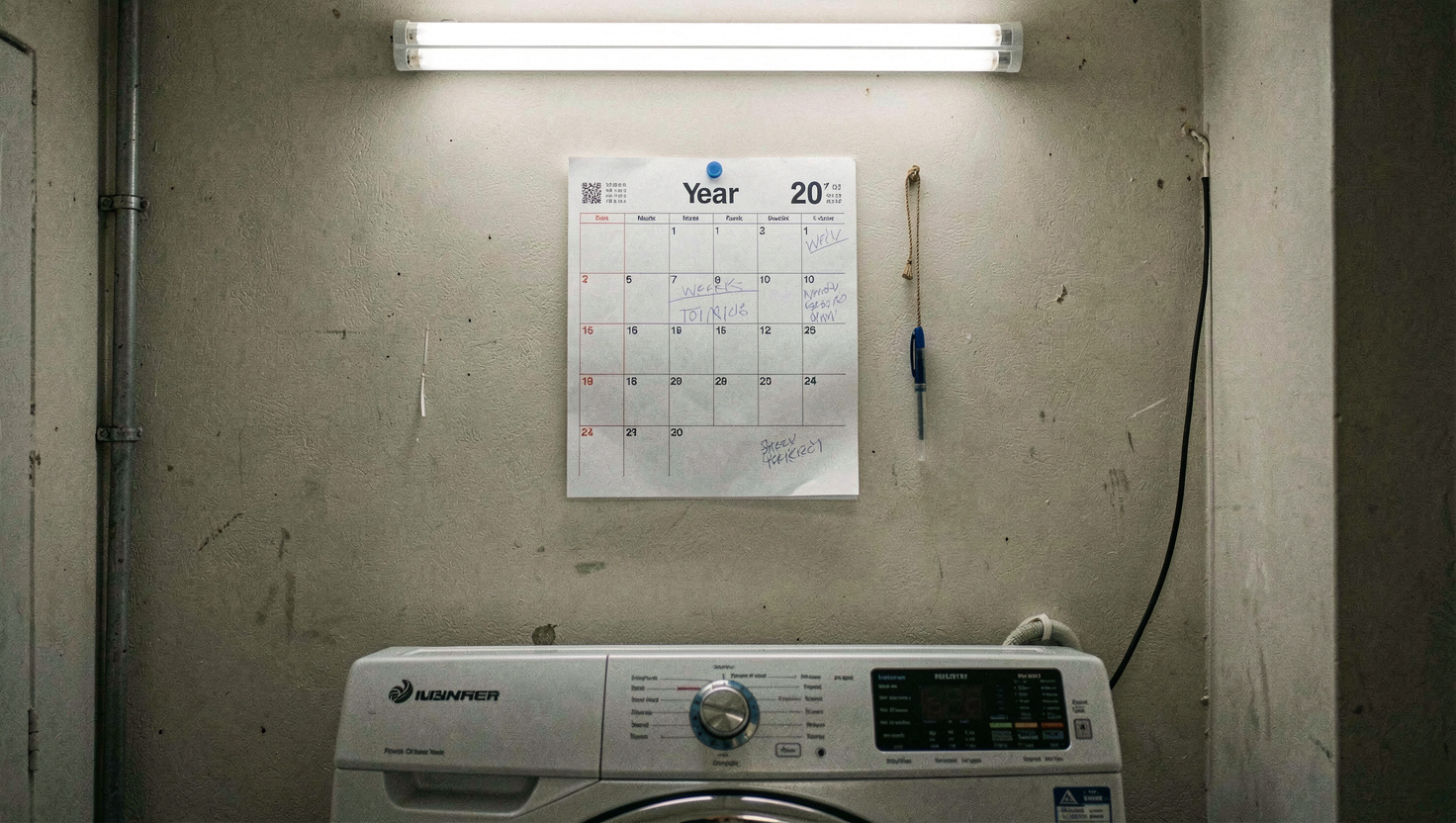
A maintenance calendar holds jobs that arrive by season, not jobs that arrive by mood. Filters, drains, gutters, alarms and the two appliances that fail without warning.
A store cupboard fails at the back, quietly, in tins nobody reached. Loading new stock behind the old is the whole method, and it costs a minute per shop.
Write down what the house contains once, room by room, with make, model and date. It takes an evening and it answers questions for years.