Labelling that survives a year
A label written in biro on masking tape is gone by autumn. What survives a year is a label chosen for the surface it sits on, and written the same way every time.
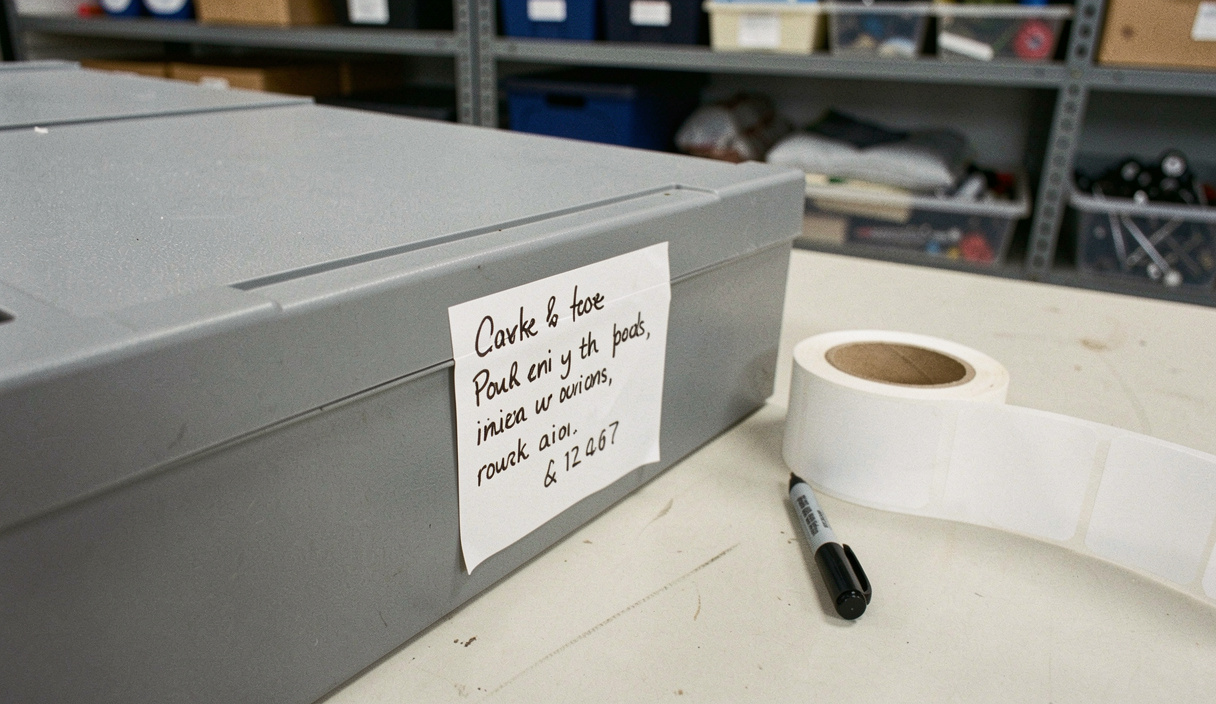
Almost every household has tried labelling and almost every household has watched it fail. Masking tape on a plastic box in a cold garage curls off within a season. Biro on a cardboard carton fades to nothing in daylight. A marker on a glass jar survives until the first wash, and a printed label on a dusty shelf edge falls off the week after it was put there.
Labels do not fail because people stop caring. They fail because the label was chosen without regard to the surface, the temperature and the humidity it had to live in.
Match the label to the surface
- Glass and glazed ceramic. Clean, dry, room temperature, then a self adhesive paper or vinyl label. Adhesive does not take on cold glass, which is why labels put on a jar straight from a cold larder are the first to lift.
- Textured plastic boxes. Adhesive struggles on the ribbed surfaces used for storage crates. Use a label pocket or a tie on tag, or a smooth strip of wide clear tape applied first with the written label underneath it.
- Cardboard. Write directly on it, in permanent marker, in the same corner every time, on two adjacent faces so the box can be read whichever way it is stacked.
- Shelf edges. A strip of masking tape is fine indoors and lasts about a year, which is often all you need. Outdoors or in a garage, use a clear pocket or write on the shelf itself.
- Freezer. Only freezer grade adhesive holds below zero. Everything else lets go within days. Write before the container is filled and cold, never after.
The pen matters as much as the label. A pigment ink permanent marker survives daylight and handling; a water based fibre tip and a ballpoint on shiny stock do not. Cheap till receipts and thermal labels fade on their own regardless of what is written on them, which is one reason receipts get photographed in the box where warranties live.
What to write
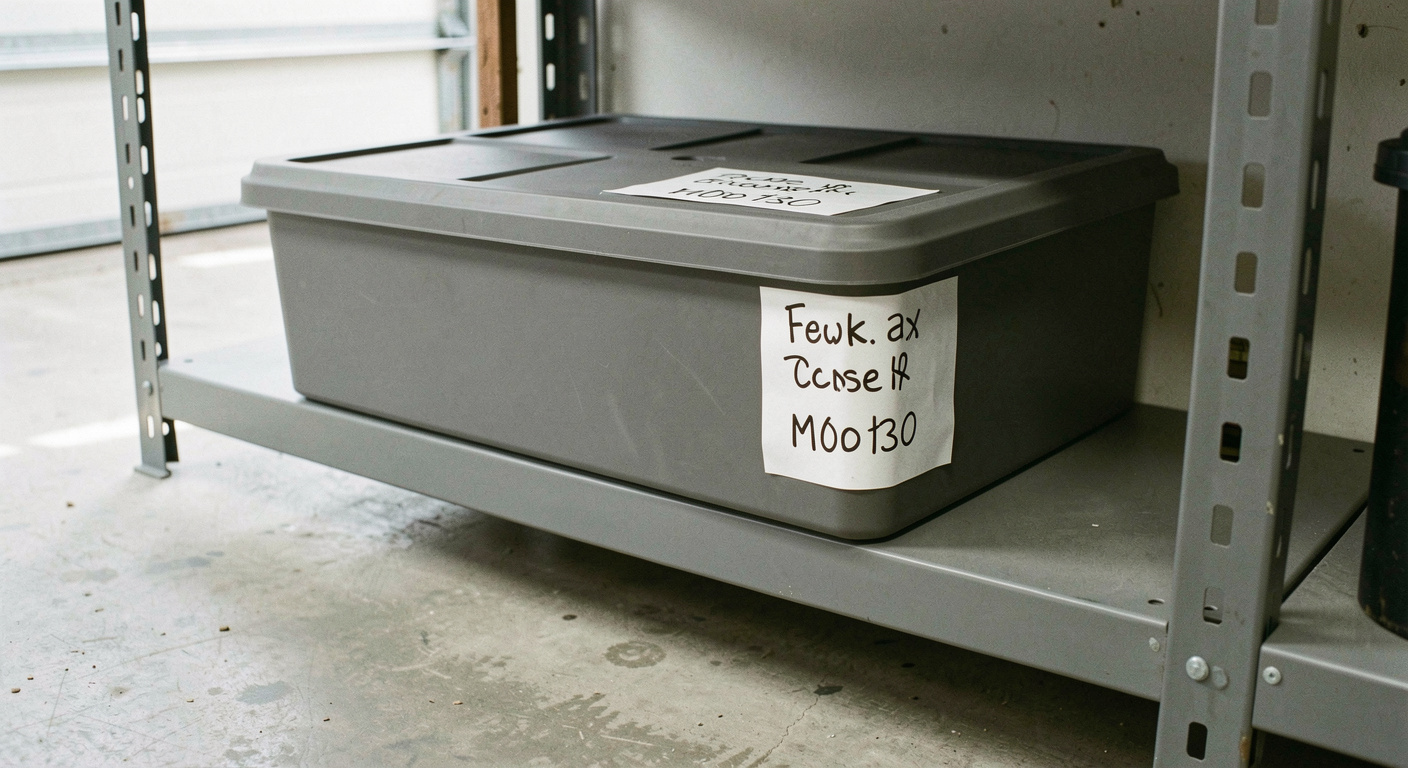
Two lines is the working format: what it is, and when it went in. The date is what makes a label useful a year later, and it is the part people leave off.
Write nouns rather than categories. Winter coats and boots, Nov 2026 tells you whether to open the box. Miscellaneous guarantees the box will be opened, and it will be opened every time anything is missing. If a box genuinely holds many small things, list the three largest and add nothing else.
Keep the wording identical across the house. If one shelf says bedding, double and another says double bed linen, a search stops working, because the eye is scanning for a pattern rather than reading. Same word order, same abbreviations, same corner of the box, every time.
Where labels earn most
Not on the daily band. The jars you use every morning do not need labelling, because you know them by shape and position, and labelling them is decoration rather than function. Labels earn their time on exactly the things you touch rarely: the loft, the garage, the top of the wardrobe, the back of the under stairs cupboard, the freezer.
They also earn their time on rules. A shelf edge that reads keep clear is doing more work than any amount of intention, because it tells anyone in the house what the space is for, which is what defends a shelf left deliberately bare from being quietly filled.
And they hold a frequency sorted house together. Once objects are placed by how often they are used rather than by category, the placement is not self evident to anyone else, so it has to be written down somewhere. That is the missing half of where things live, and why frequency decides it.
The failure modes worth knowing
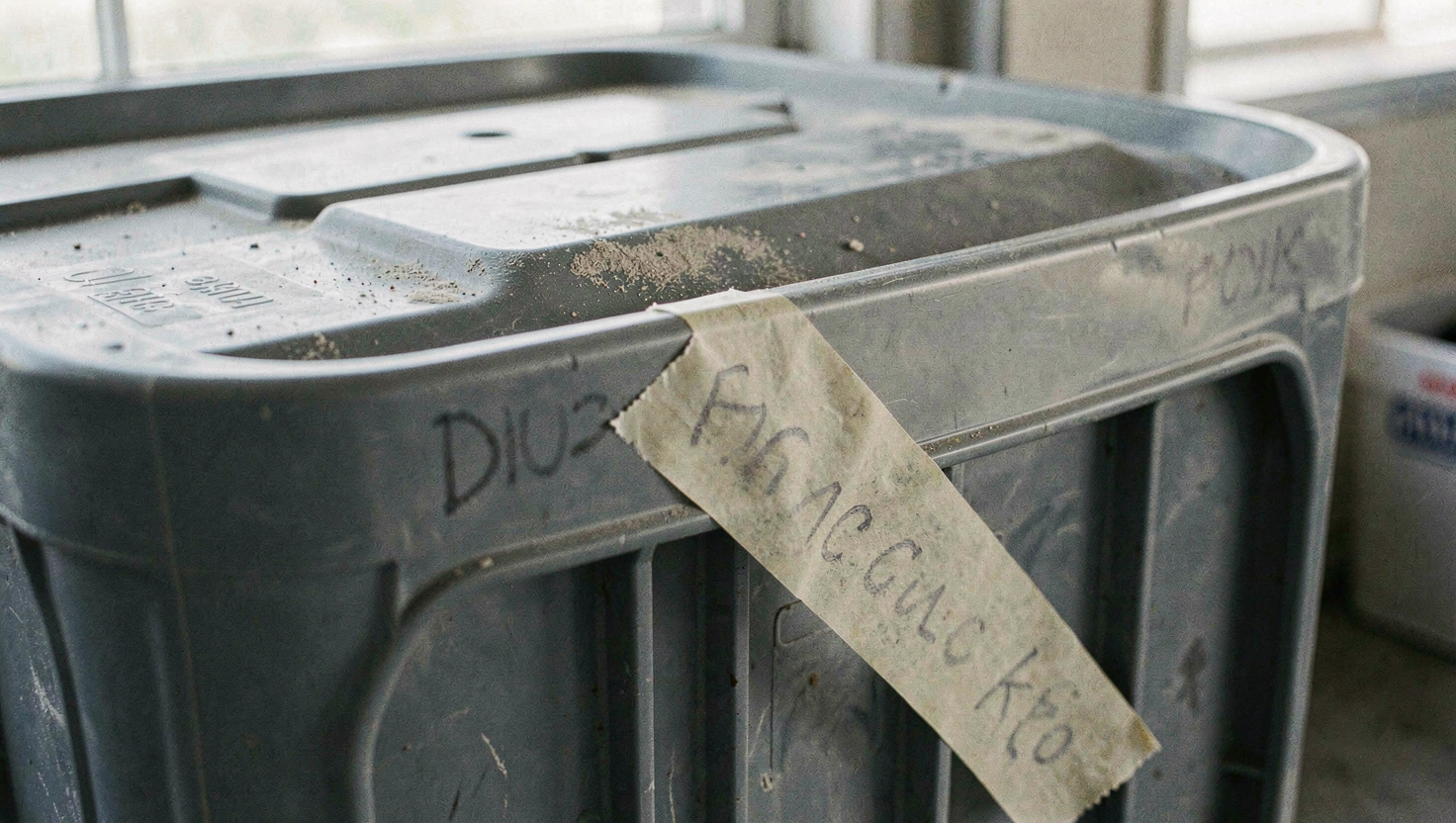
Labelling the container instead of the contents. A box labelled and then reused for something else, without the label being changed, is worse than no label at all, because it will be trusted. Change the label at the moment the contents change, or take the old one off before the box is put down.
Labelling too finely. Twenty categories in a garage means twenty judgement calls per object, and after a fortnight everything goes in the nearest box. Six or seven labels covering everything beats twenty that are precise.
Labelling where nobody is looking. A label on the top of a stacked box, or on the face that ends up against the wall, is invisible. Label the face that will be presented, and for anything stacked, label the end and the top.
Keeping it alive
Check the labels once a year, at the same time as the loft or the garage gets looked at during the seasonal walk. Any label that is curling, faded or wrong gets replaced on the spot with the roll and pen that live in the box you are already standing next to.
Keep the roll of labels and the marker together, in the place where labelling happens, not in a drawer in another room. A labelling system that requires a trip is a labelling system that ends after the first box.