Where things live, and why frequency decides it
A jar used daily and a jar used at Christmas should never share a shelf. Sorting a house by how often you reach for something removes most of the tidying before it starts.
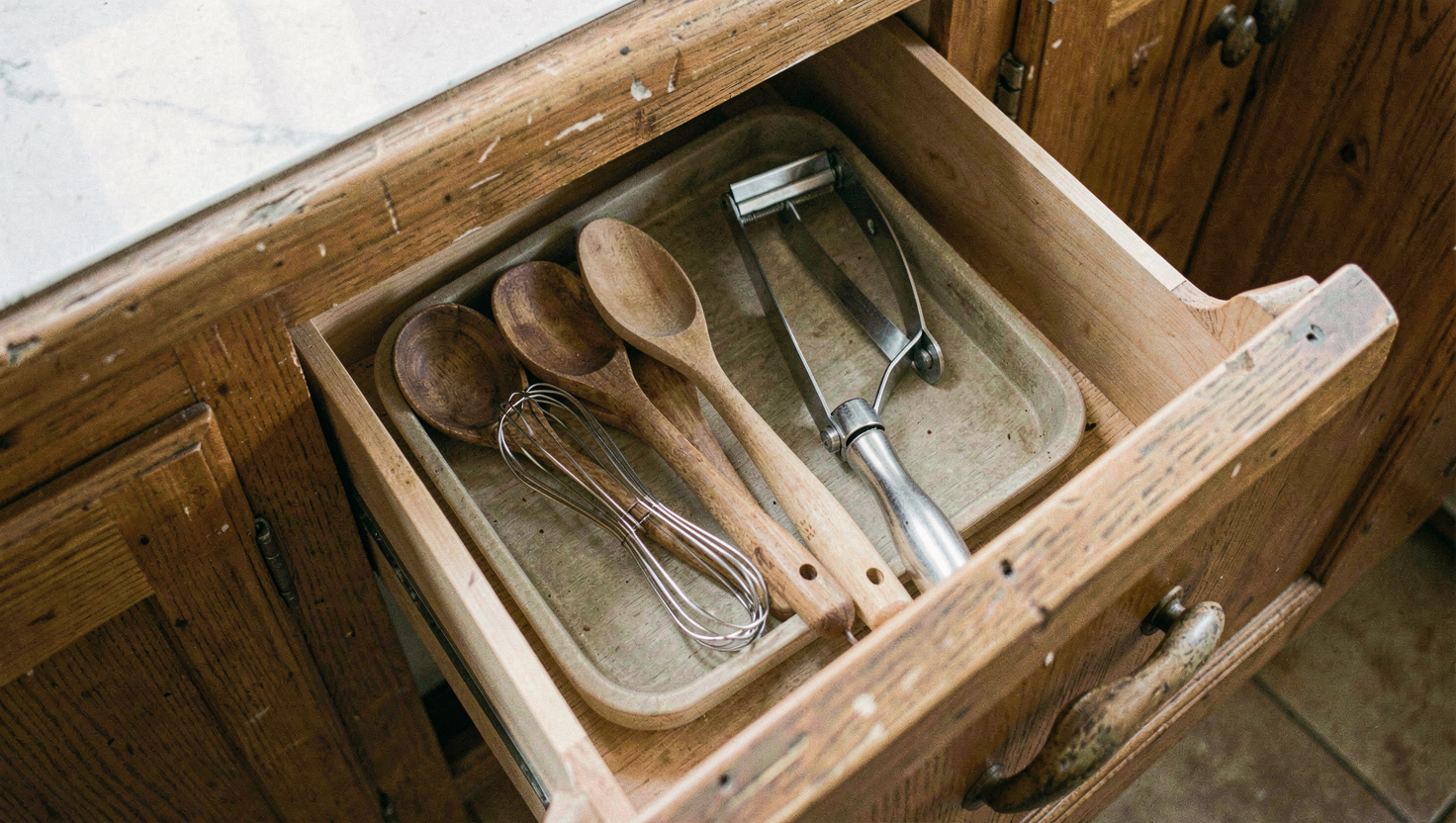
Most tidying is not the result of mess. It is the result of objects living in the wrong place and having to be carried back to it, twice a day, for years. A house where everything is stored within reach of the moment it is used produces very little to tidy, because putting a thing away costs nothing. A house where storage was decided by whichever cupboard happened to be empty produces a permanent low-level drift of objects towards the nearest flat surface.
The rule that sorts this out is frequency. Not category, not size, not what looks neat behind a closed door. How often do you reach for it, and from where.
Four bands of frequency
Everything in a house falls into one of four bands, and the band decides the shelf.
- Daily. Kettle, mugs, the two knives you actually use, tea, the wooden spoon, keys, the coat you wear this month. These belong in the easiest position in the room where they are used, and nothing else may compete for that position.
- Weekly. Baking tray, colander, the good scissors, spare bulbs, the vacuum. One step or one door away is fine. Opening a cupboard is not a cost, walking to another room is.
- Monthly to seasonal. Roasting tin, spare bedding, the sewing box, garden tools, winter coats out of season. These can go high, low, or in another room entirely.
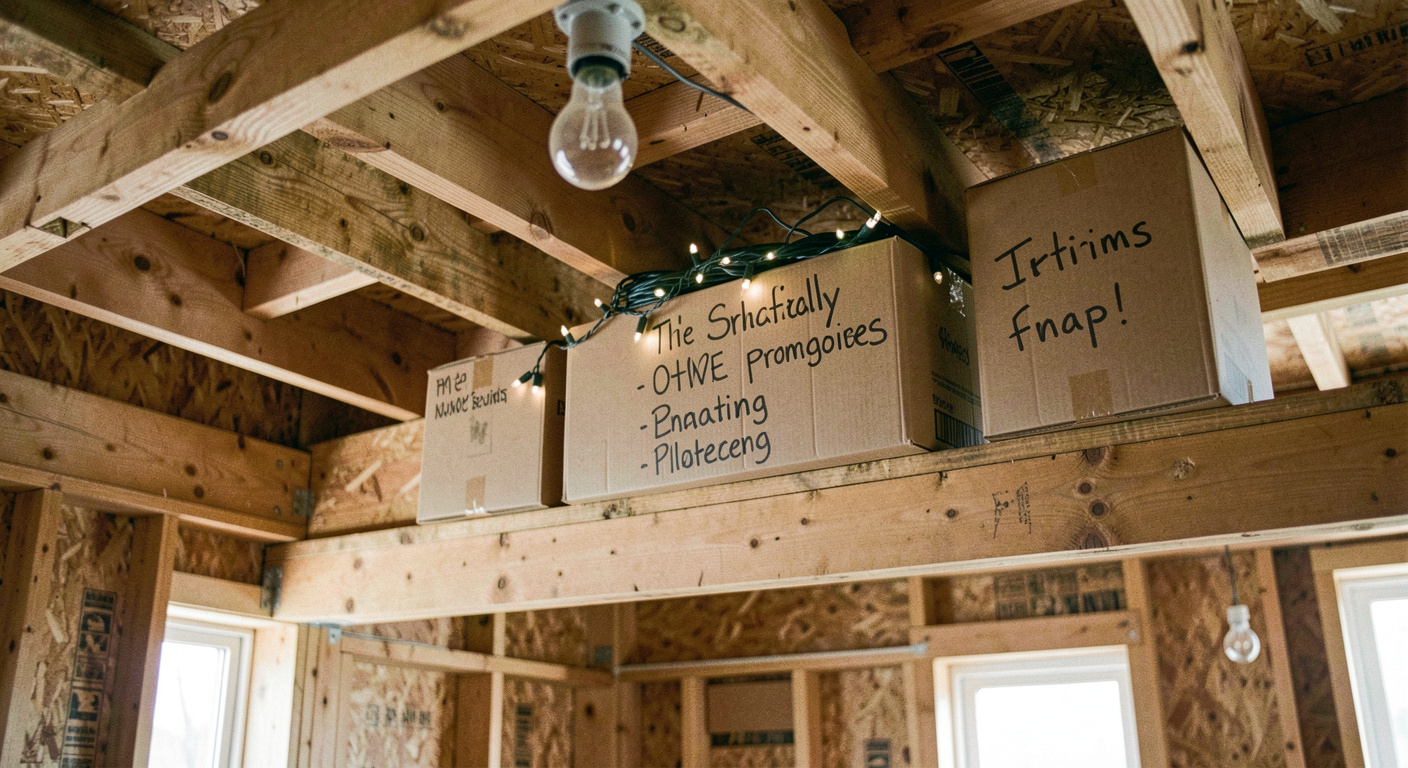
- Yearly or almost never. Christmas boxes, the fondue set, camping equipment, the paperwork you keep for six years and hope never to read. Loft, garage, top of the wardrobe. The only requirement is that they are labelled well enough to be found in the dark.
The mistake almost every kitchen makes is mixing bands on the same shelf. A jar of daily coffee behind a bag of icing sugar used once a year means the icing sugar gets moved three hundred times. Sort by band first, by category second, and the moving stops.
The golden zone, measured
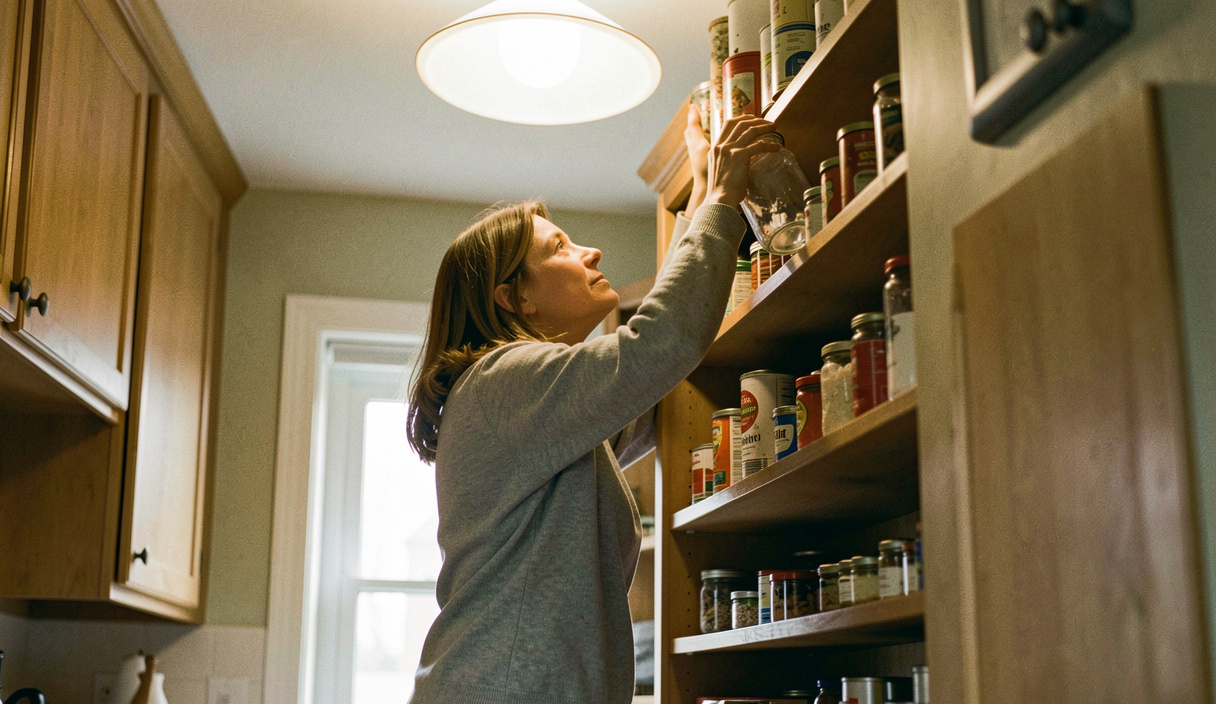
In a standard fitted kitchen the worktop sits at about 900 mm from the floor and the wall units start somewhere between 1 350 and 1 500 mm. The band that costs nothing to reach runs roughly from hip height to shoulder height, which for most adults is 750 mm to 1 400 mm, and no more than an arm's length forward. That is perhaps fifteen per cent of the storage volume of a kitchen, and it is where the daily band lives. Everything above shoulder height needs a stretch or a stool. Everything below hip height needs a knee.
The same measurement runs through the whole house. In a wardrobe, the hanging rail is the golden zone and the shelf above it is not. In a hallway, the hooks are the golden zone and the top of the cupboard is not. When a room refuses to stay tidy, it is usually because something in the daily band has been given a place outside that reach and the household has quietly voted against it.
The test that settles arguments
Stand where you are when you need the object, and count. How many steps, how many doors, how many other objects have to move first. Three or more of any of those and the object will not be put back reliably, whatever anyone intends. A pair of scissors that lives in a drawer in another room is not stored, it is hidden.
Two useful consequences follow. First, duplication is sometimes correct: a second pair of scissors and a second roll of tape, one upstairs and one down, is cheaper than the time spent fetching. Second, a thing used in two places belongs in the place where forgetting it hurts more. The tape measure lives with the tools, not in the kitchen drawer, because a tool that is missing from a toolbox stops a job.
The objects that never settle
Every household has six to ten objects that refuse to stay anywhere: the phone charger, the sunglasses, the school letter, the small screwdriver, the thing that came off the thing. They move around the house every night during the fifteen minute reset, and they are the clearest sign that a decision has not been made.
Write them down for a week. Note where you actually put each one when you were in a hurry, because that is the place the house has chosen. Then make it official: a shallow dish on the hall shelf for the pocket contents, a hook by the door for the dog lead, a labelled box for the cables. The house is usually right. The label is what makes it stick, which is why a label written to survive a year earns its ten minutes.
What frequency sorting does not fix
It does not create room. If a cupboard is full to the door, moving things by frequency only rearranges the pressure, and the system fails again in a fortnight. Storage needs slack to absorb a delivery, a birthday, a fortnight of illness, which is the argument for keeping a shelf bare on purpose.
It also does nothing about stock that quietly ages at the back. Frequency tells you where a tin should live, it does not tell you which tin to open first, and that is a separate discipline covered in rotating a store cupboard first in, first out.
Start with one drawer, in the room the household uses most, and give it only daily band objects. It takes twenty minutes and the effect is visible the same evening: the drawer opens, the thing is there, and nobody carries anything anywhere.