The empty shelf is not wasted space
A cupboard filled to capacity has no way of absorbing a delivery, a school holiday or a bad week. Slack is what makes a storage system survive contact with real life.
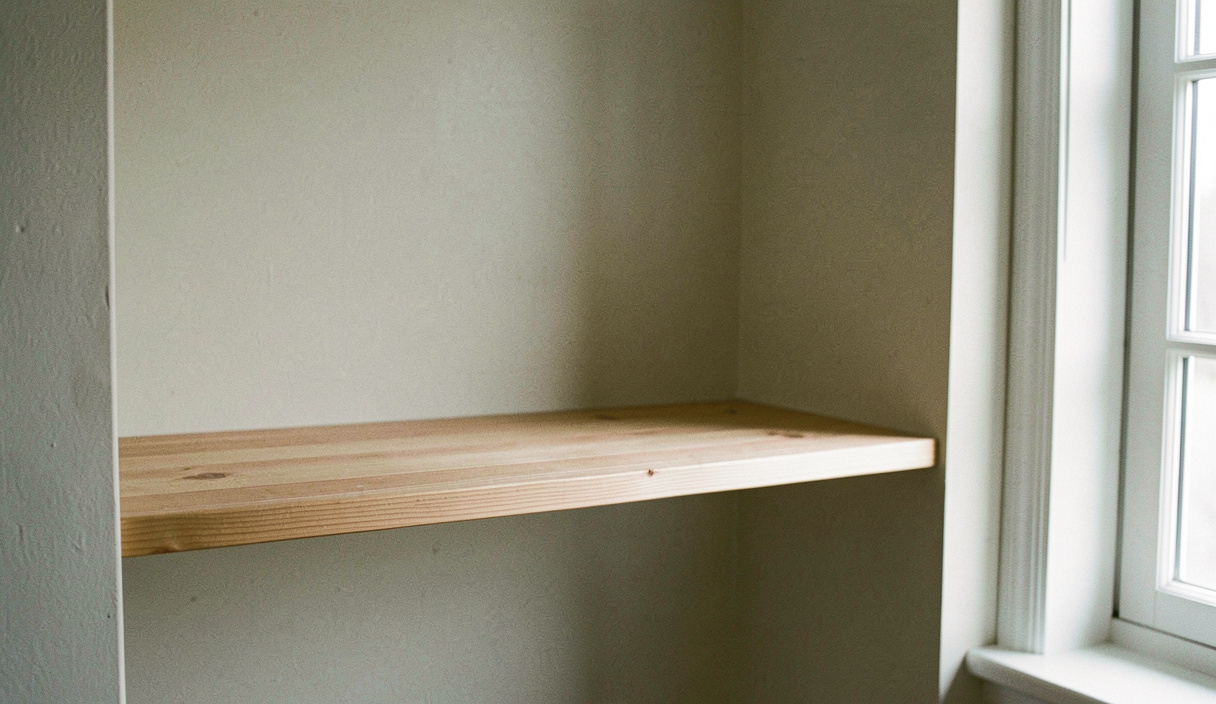
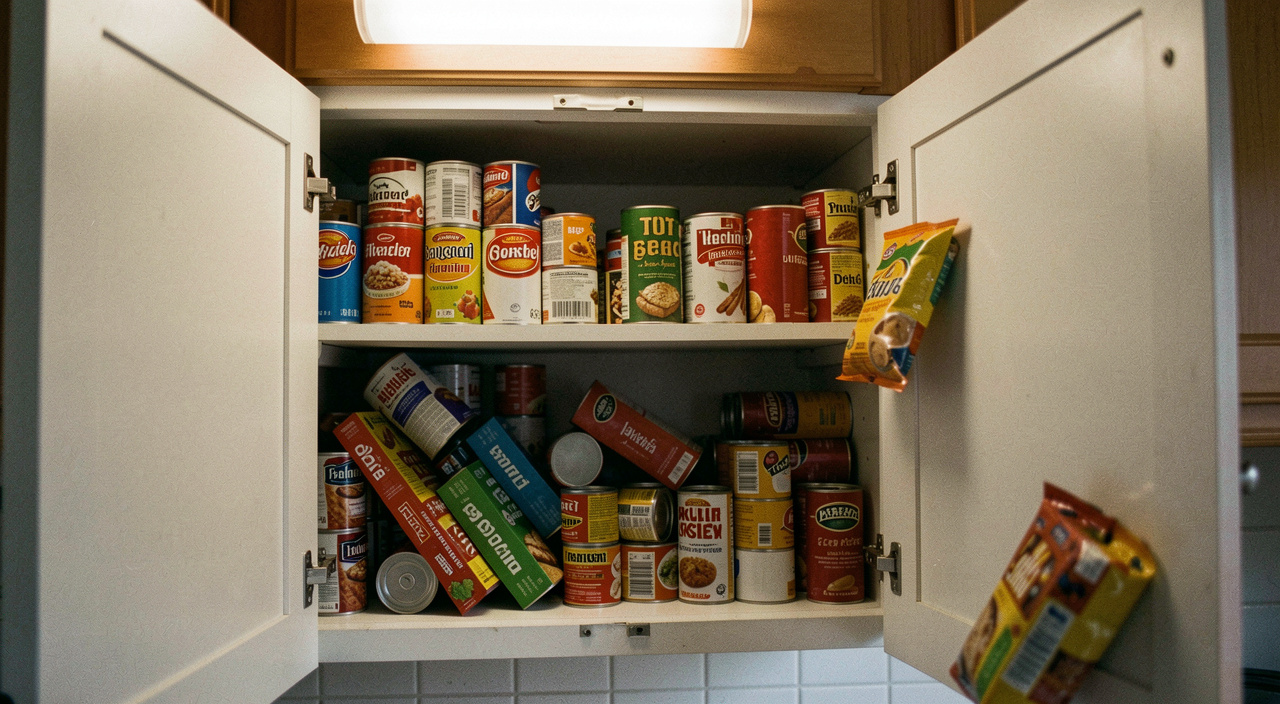
A cupboard packed to the door looks like storage working at full efficiency. It is the opposite. A full cupboard has no capacity to absorb anything, and a household is a machine for producing things that arrive unexpectedly: a bulk offer on tins, a fortnight of a child being at home, a delivery that came early, a bag of things brought back from somebody else's house.
When there is nowhere for those to go, they go on the floor of the cupboard, or on the worktop, or into a bag in the hall that stays there for six weeks. The system did not fail because it was badly designed. It failed because it had no slack.
What slack actually buys
- Absorption. Anything that arrives out of rhythm has a place to wait without displacing something else.
- Visibility. A shelf loaded to eighty per cent can be stored one row deep, so the back row does not have to be excavated to see what is there.
- Repair. When a cupboard has to be emptied for a leak, a shelf collapse or a repaint, the contents need somewhere to stand.
- Change. Households change what they own every year. A full system can only ever be reorganised, never extended.
Eighty per cent is the working figure. Above roughly that, the time cost of putting something away starts to rise steeply, because putting away stops being a single action and becomes a rearrangement. Below about sixty per cent the space is genuinely underused. The band between them is where a cupboard is pleasant to use.
Where the slack should be
Empty space distributed evenly is not slack, it is just a slightly emptier cupboard. Slack works when it is concentrated somewhere obvious and given a name, so that nobody quietly fills it with jam jars.
In a kitchen, the useful blank is one whole shelf at chest height, or the front third of a deep shelf. In a linen cupboard it is the space that lets a full change of bedding sit while another set is in the wash. In a wardrobe it is fifteen centimetres of empty rail, which is what makes hanging a coat a one handed action rather than a wrestle. In a garage or a loft, it is a marked square of floor by the door.
Defending it
The empty shelf will be colonised, usually within a month, usually by something with no other home. Three defences work.
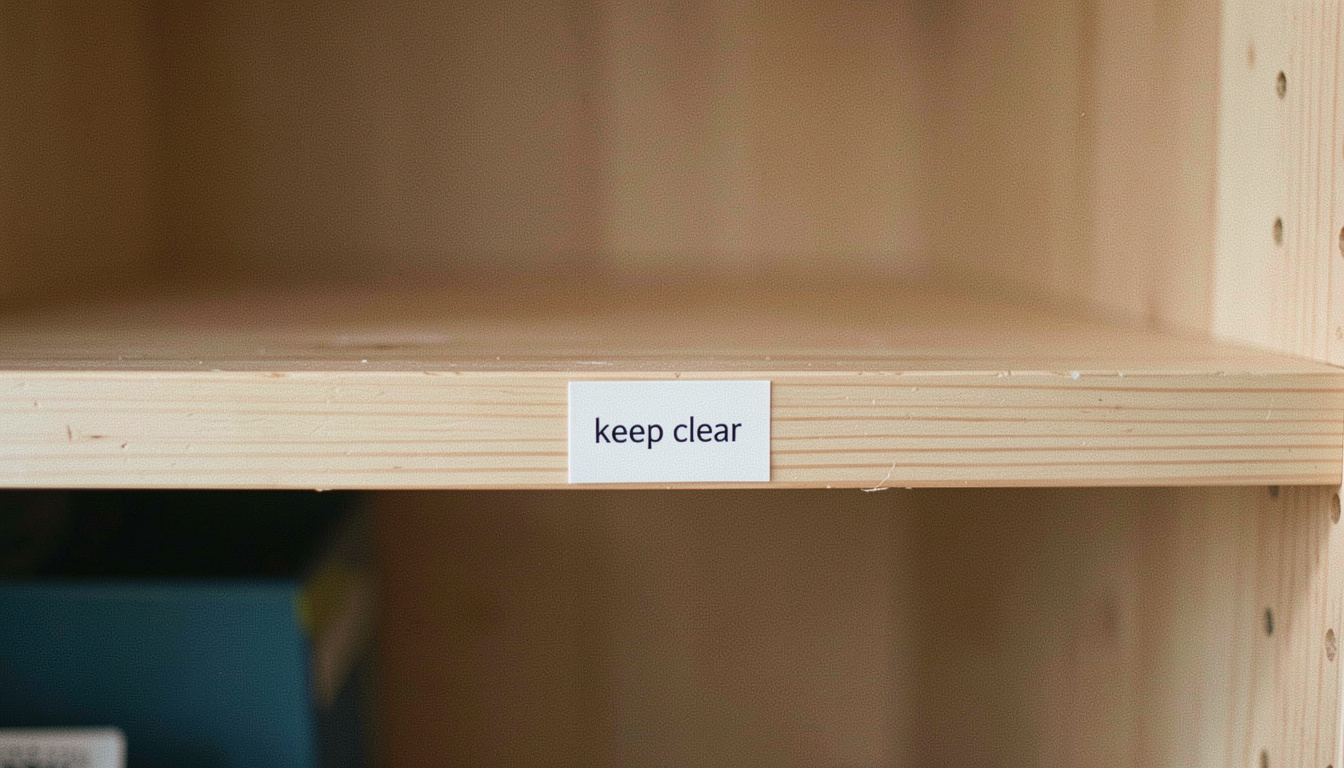
Say what it is for. A label on the shelf edge reading incoming, or keep clear, converts a bare shelf from an opportunity into a rule. This is where the general discipline of labelling that survives a year earns itself, because a label that peels off in September takes the rule with it.
Clear it on a fixed day. Anything on the empty shelf is dealt with during the weekly hour. It is a waiting area, not a destination, and a waiting area with no scheduled departure becomes a store.
Refuse to solve pressure by filling it. When a cupboard becomes tight, the temptation is to use the slack. That is the moment the system is telling you there is too much of something, and the answer is a cull, not an occupation.
Finding the space in a house that has none
Every full house contains one or two categories that are quietly enormous. Bedding is the usual one: households commonly keep four or five sets per bed when two are in use and a third is the honest maximum. Plastic containers without lids are another, as are carrier bags, cables for devices that have gone, and glassware kept for a party that happens once every three years.
Take one category, count it, and set a number. Two sets of bedding per bed, six containers with matching lids, one drawer of cables. The number is the decision, and after it is made the cull takes twenty minutes rather than an afternoon, because nothing has to be judged individually.
Then check the frequency bands. A cupboard is often full because seasonal or yearly items are occupying daily space, which is not a volume problem at all but a placement one, and it is solved by the method in where things live, and why frequency decides it.
What the empty shelf does not do
It does not reduce what a household owns. Slack makes an over full house work slightly better for a while, and then the same pressure returns, because the underlying number has not changed. The bare shelf is a shock absorber, not a cure.
It does not help with stock rotation either. There is nothing about having room that stops a new tin being put in front of an old one, which is a separate habit set out in rotating a store cupboard first in, first out.
Pick one cupboard, the one that annoys you most, and empty one shelf of it this week. Write keep clear on the edge. The value shows up the first time something unexpected arrives and there is somewhere to put it, which in most households is within a fortnight.