The Sunday look ahead
Ten minutes with the calendar on a Sunday removes most of the small emergencies of the week. Which nights nobody will cook, which morning leaves early, what has to be bought before Wednesday.
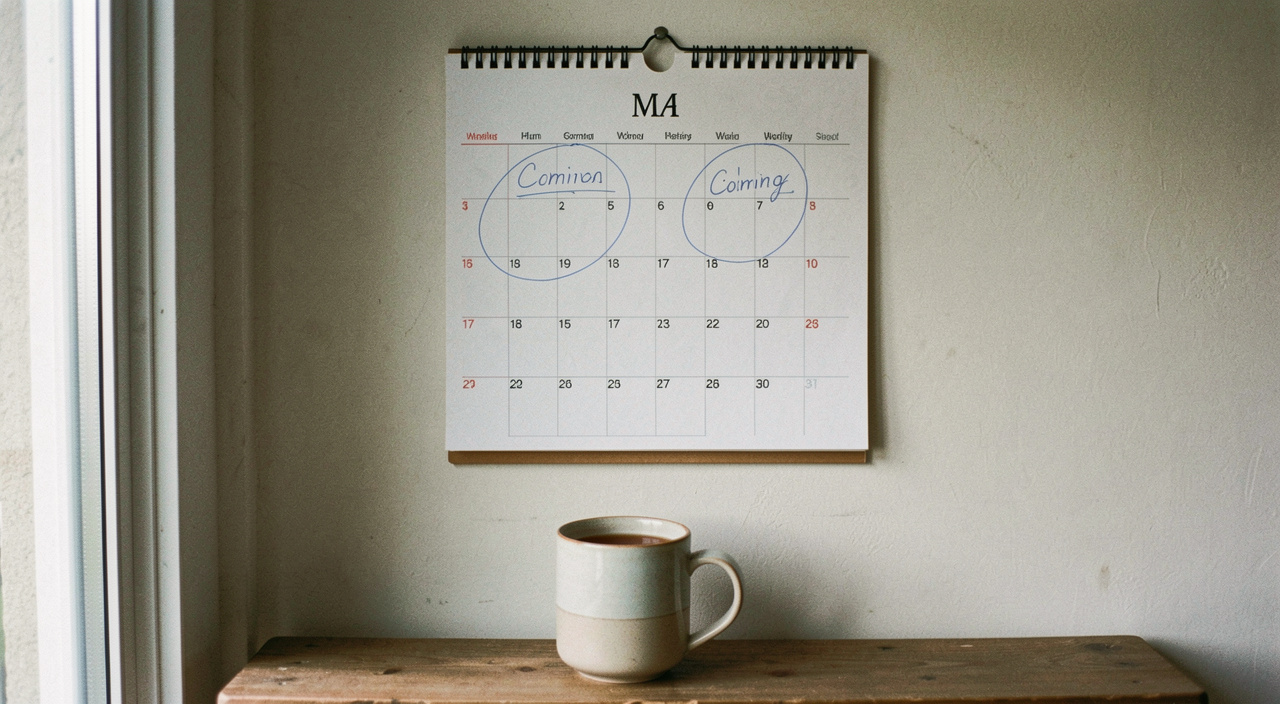
Most household emergencies are not emergencies. They are ordinary events that were known about for a fortnight and noticed on the morning. The kit that had to be washed, the form that needed a signature, the early train that meant nobody would be home to cook, the birthday that required a present bought before Friday.
Ten minutes on a Sunday, with the calendar open and everyone's week visible in one place, removes most of them. Not by planning the week in detail, which nobody sustains, but by answering four questions.
The four questions
- What is fixed? Appointments, deliveries, trips, anything with a time attached that cannot move. Write them where the whole household can see them, not only in one person's phone.
- Which nights will nobody cook? Late finishes, evening activities, the night somebody is away. Those nights get a decision now: something from the freezer, something that takes twelve minutes, or eggs on toast without apology.
- What has to be bought before it is needed? Presents, ingredients for a specific meal, the thing for the school trip, the prescription. Anything with a lead time longer than a day.
- What has to leave the house, and when? Forms, returns, a parcel, the recycling that only goes out on alternate weeks. These are the ones that cost most when missed, because they cannot be done retrospectively.
Four questions, in that order, out loud if more than one person lives in the house. The order matters: fixed events determine the cooking nights, the cooking nights determine the shopping, and the shopping determines what has to happen before Wednesday.
The two lists it produces
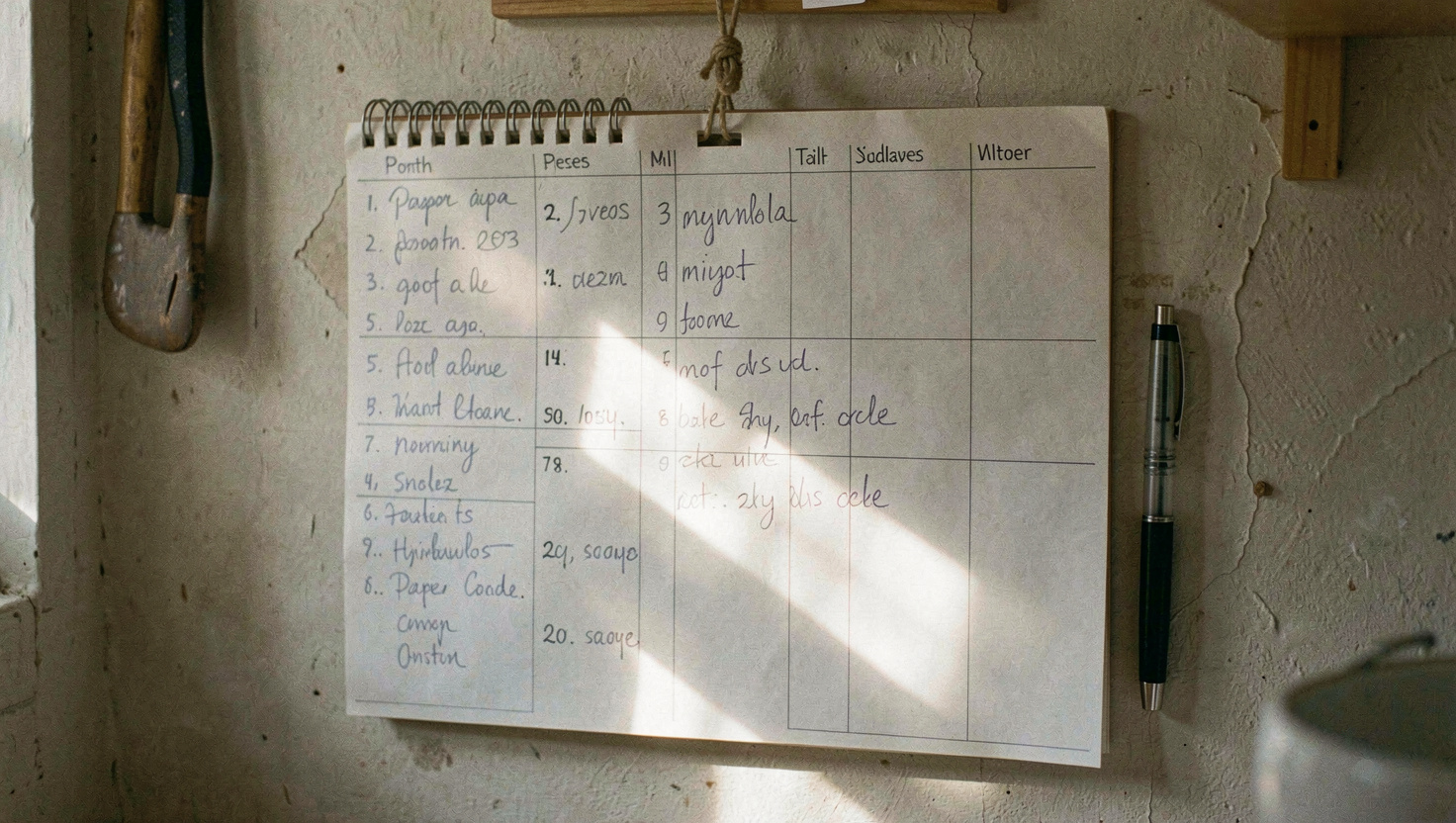
The look ahead has an output, or it was a conversation rather than a routine. It produces exactly two things.
A shopping list, grouped by aisle, written against the meals that are now decided. Sitting next to a store cupboard list with par levels on it, this is a ninety second job rather than a survey, which is the practical payoff of a pantry list built from the meals you repeat.
A before Wednesday list, of at most five things, written where it will be seen on Monday. Not a to-do list for the whole week, which is a form of fiction, but the short list of things that stop being possible if they slip. Five is the limit. If there are nine, three of them are not really this week.
Where it happens, and with what
Paper on a wall beats an app for the same reason a shelf beats a box: it is visible without being opened. A month to view planner in the kitchen, marked in pencil, is read by everyone who passes it and requires no one to remember to look. Shared digital calendars are excellent for the fixed events and useless for the ambient awareness that stops the Thursday surprise.
Ten minutes is the whole budget. It is short enough to survive a bad Sunday and long enough to cover four questions for four people. Attach it to something that already happens, coffee after breakfast, the moment the shopping order would otherwise be placed, so that it never has to be remembered as its own event.
What it is not
It is not a meal plan. Deciding all seven dinners on a Sunday is a well known way to end up with three of them uncooked and the ingredients thrown away on Friday. The look ahead only decides the nights that are already constrained, and leaves the rest open on purpose.
It is not a cleaning plan. The floors and the bathrooms belong to the weekly hour, which runs on its own slot and does not need to be negotiated every week.
It is not a place to solve problems. If the look ahead turns up something that needs a decision, a conversation or a phone call, it goes on the before Wednesday list and the meeting continues. Ten minutes protects itself only if nothing is allowed to expand inside it.
When the week goes wrong anyway
It will. Illness, a cancellation, a day that eats everything. The value of the look ahead is not that the week goes to plan, it is that when the week goes wrong you already know what was load bearing. Knowing that Thursday was the only night anyone could cook, and that the parcel had to go on Tuesday, is what makes a bad week recoverable rather than expensive.
Any paperwork the look ahead surfaces should go straight back into the Now folder of the paper drawer with a date pencilled in the corner, so that next Sunday starts from a folder rather than from memory.
Try it for three Sundays. The first one takes twenty minutes because there is a backlog of things nobody had looked at. The third takes eight.