Line drying indoors without the damp
Washing dries indoors on two conditions: moving air and somewhere for the moisture to go. Get those wrong and the wall behind the airer pays for it.
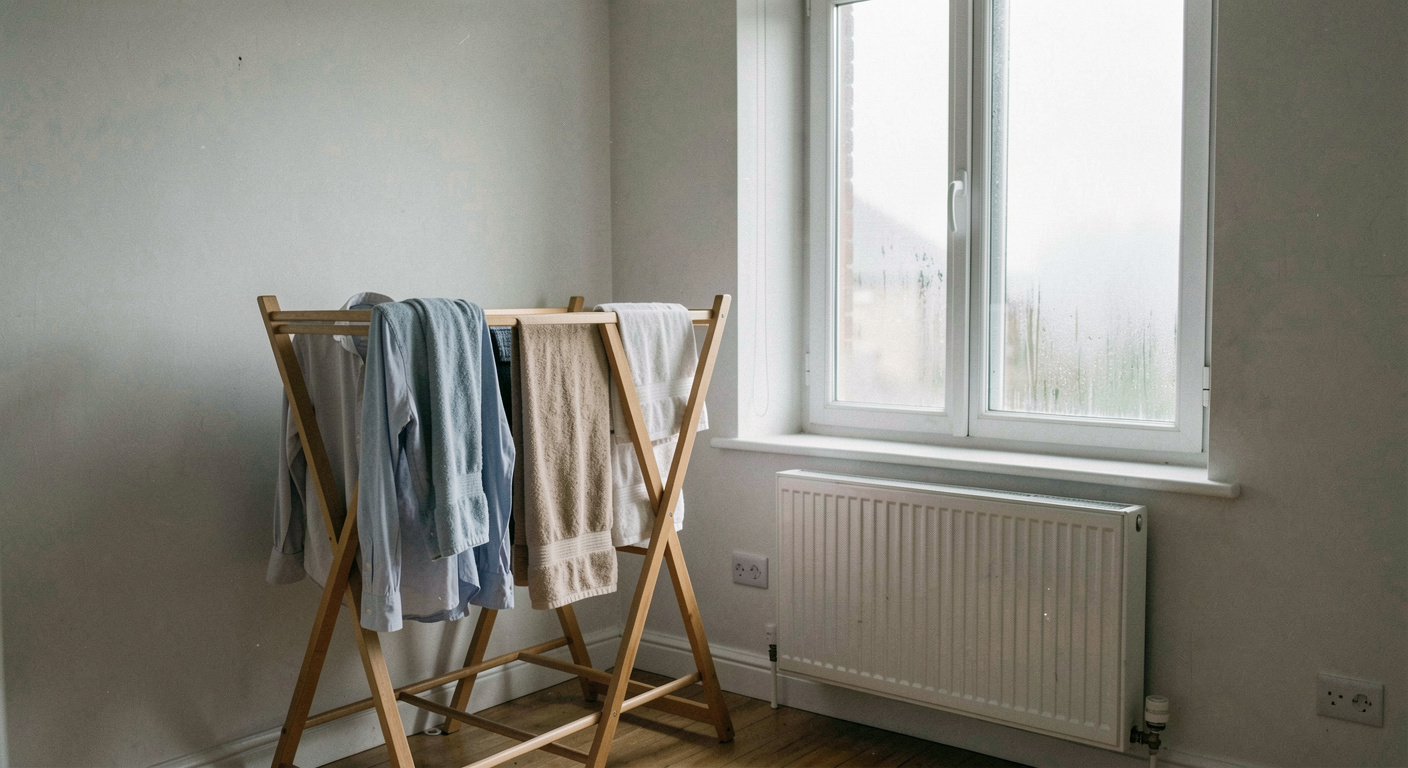
A single machine load of washing holds between one and a half and two litres of water when it comes out of the drum after a full spin. Dried indoors, all of that goes into the air of the house. It does not disappear. It moves until it finds the coldest surface available, and there it condenses: on the window reveal, on the outside wall behind a wardrobe, in the corner where the ceiling meets an external wall. That is where black mould starts.
Indoor drying is not the problem. Indoor drying with nowhere for the moisture to go is the problem, and it has two conditions attached.
The two conditions
Air has to move across the washing. Still air next to a wet shirt saturates within minutes and then stops taking water. This is why a heavily loaded airer in the middle of a closed room takes two days to dry and smells sour by the end of it, while the same load in a draught is done in a morning.
The water has to leave the house. Either through an open window, through an extractor running long enough to matter, or by being condensed and collected in a dehumidifier. Heat alone does not remove water, it only raises how much the air can hold, which is why a radiator in a sealed room dries the clothes and wets the walls.
The arrangement that works
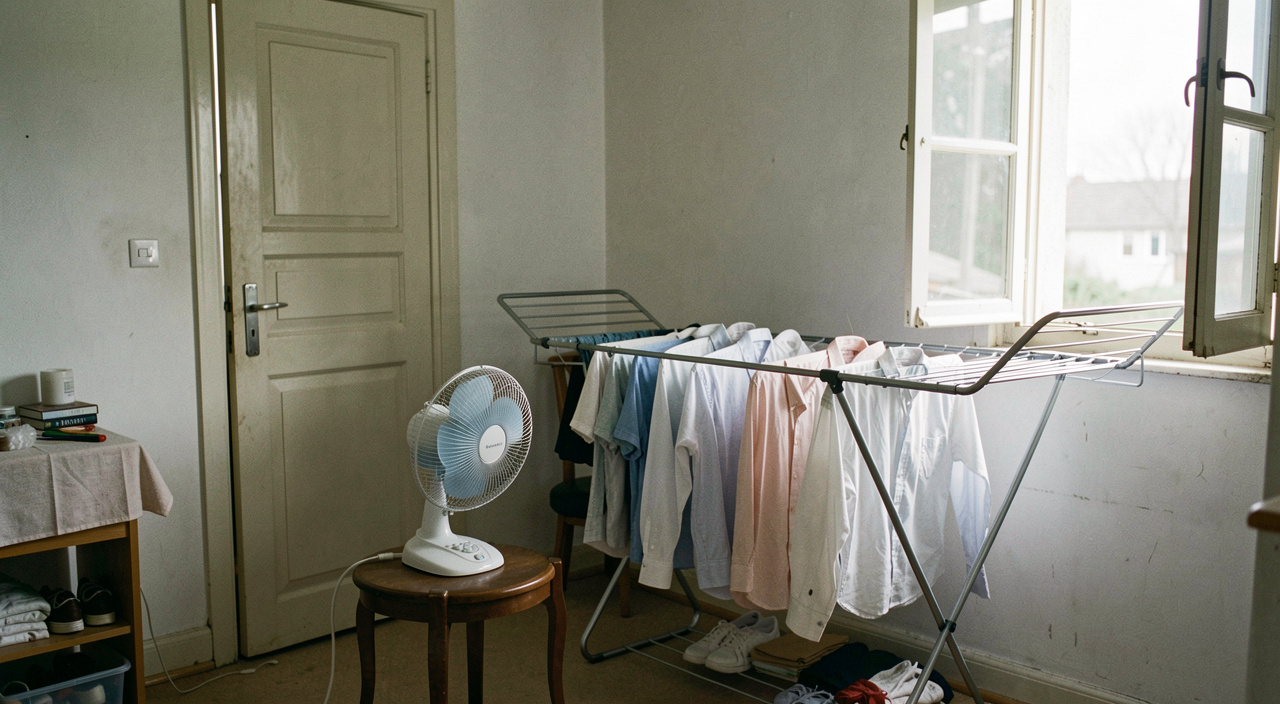
- One room, door closed, window open a crack. Contain the moisture in the smallest room you can spare and vent it. A closed door is what stops the water touring the house and landing on a cold bedroom wall.
- Spin harder before you start. A 1 400 rpm spin leaves noticeably less water in a load than 800 rpm, and the extra two minutes in the machine saves hours on the airer. Check the care symbols first, because some garments carry a reduced spin instruction.
- Load the airer in one layer. Nothing folded double, nothing touching its neighbour, heaviest items on the outer rails where the air moves. Half a load spread properly dries faster than a whole load crammed.
- Give it moving air. An ordinary desk fan on the lowest setting, aimed along the airer rather than at it, cuts drying time substantially for a very small amount of electricity.
- Take it down when it is dry. Clothes left on an airer for two extra days keep a room humid for no reason at all.
Where not to put the airer
Not in a bedroom, and particularly not a bedroom with an external wall behind the bed. Two adults asleep add moisture of their own, and a bedroom is the coldest occupied room in most houses overnight.
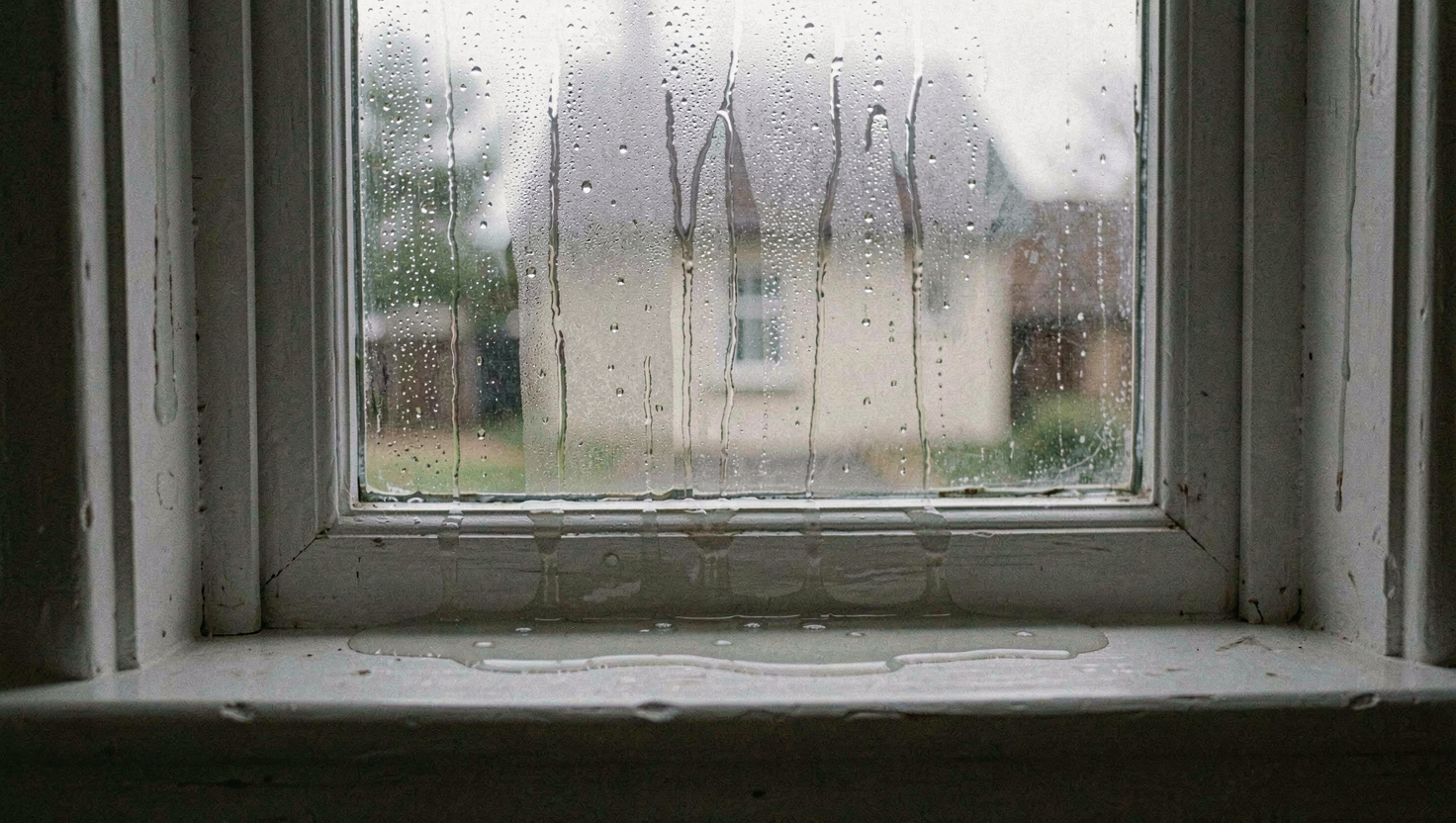
Not against an outside wall, and not in front of a window that runs with condensation, because the surface is already at the point where water is coming out of the air.
Not draped over radiators. Covering a radiator makes the room colder, the heating run longer, and the wall behind it wetter. A garment on a radiator also dries from the outside in and often ends up dry to the touch and damp at the seam, which is how a wardrobe starts to smell.
Reading the house
The house will tell you whether the arrangement is working, and it uses the same signs that matter on the seasonal walk around a house. Streaming windows in the morning, a musty smell in a built-in wardrobe on an outside wall, black spotting on window sealant, wallpaper lifting at a seam near a corner. Any of those in the room you dry in means the water is not leaving.
An inexpensive humidity gauge settles arguments. Indoor relative humidity kept roughly between forty and sixty per cent is a comfortable working range. Above about seventy per cent for long periods, mould has what it needs. Watching the number rise while a load dries, and fall again after the window has been open twenty minutes, is the clearest possible demonstration of what ventilation does.
What this does not solve
It does not solve a building fault. If a wall is wet in summer, if damp rises in a patch above the skirting, or if a stain reappears after redecoration, the water is coming from outside and no amount of drying discipline will help.
It does not change what the fabric wants. Wool still has to be dried flat, and a garment marked no tumble drying stays that way whatever the weather, which is a matter of reading a care label without guessing.
And it does not reduce the number of loads. That is a question of how much linen a household keeps in service and how it is rotated, which is the argument in the four towel rotation: fewer, better managed items washed on a fixed rhythm produce fewer loads than a large stock washed at random.
Try one week of the closed door, cracked window and single layer arrangement. Most households find the same load dries in a morning rather than in two days, and the windows are clear when they come down for breakfast.